Moving Past the Hype: Pragmatic AI Integration for Enterprise Teams
This guide outlines a clear, practical approach for incorporating intelligent software into existing business workflows without disrupting core operations. Learn how to prioritize high-impact use cases that deliver measurable efficiency gains while maintaining strict data governance.
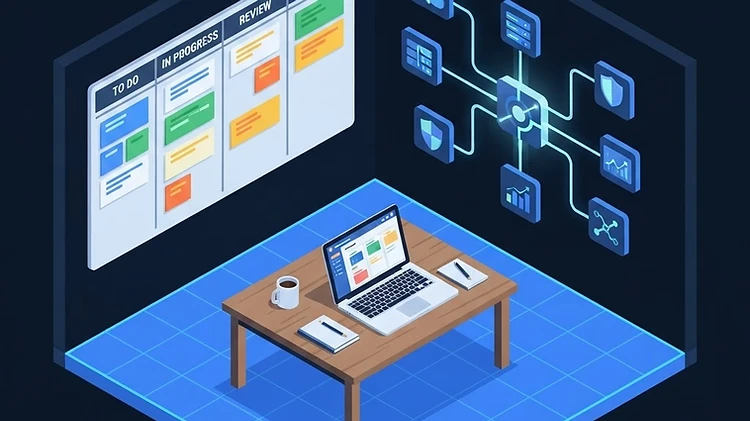
Rethinking AI Adoption
Many organizations approach AI as a magic switch that will instantly transform their bottom line. In practice, the companies that see the highest return on investment are those that treat machine learning as a specialized tool for specific tasks rather than a holistic replacement for human intuition. At BrightPoint Consulting Solutions, we observe that the most successful projects focus on eliminating friction in repetitive, data-heavy processes. Before investing in a new software platform, it is crucial to audit your existing bottlenecks. Are your teams spending ten hours a week manually extracting data from legacy PDFs? Is your knowledge management system failing because information is trapped in siloed spreadsheets? Start by identifying these specific pain points where structured data is already available.
Establishing a Data Foundation
AI systems are only as effective as the data they process. Before deploying any intelligent software, you must ensure your data hygiene is sound. This means moving away from fragmented, local file storage toward unified enterprise information services. If your data is messy, inconsistent, or locked in proprietary formats, the software will propagate those errors at scale. Start by creating a data governance framework that clarifies who owns the information, how it is cleaned, and where it resides. By establishing clear access controls and versioning standards early, you mitigate security risks and ensure that your automated systems operate on a single source of truth.
Selecting the Right Workflow Automation
Not all tasks require advanced machine learning. A simple logic-based workflow automation tool can often achieve 80% of the value of a complex neural network with a fraction of the maintenance. When evaluating systems, look for "human-in-the-loop" capabilities. These features keep your professional staff in control, requiring them to approve or adjust AI-generated outputs before they move to the next stage of the process. This hybrid model protects your company from the hallucinations and errors that can arise when models operate entirely unmonitored. Focus on tools that integrate natively with the systems your team already uses daily to minimize friction and training requirements.
Prioritizing Privacy and Security
Integrating intelligent software into enterprise environments introduces significant surface area for cybersecurity threats. When selecting a vendor, look beyond the feature list and scrutinize their data residency and encryption policies. You must verify that your business-critical data is not being used to train the vendor's base models. Opt for platforms that offer private-cloud deployments or localized hosting options. Establishing a clear internal policy on what kind of information can be uploaded to external platforms is a vital step in maintaining regulatory compliance and intellectual property security.
Conclusion
The goal of implementing these technologies should always be to make your team more effective, not just to replace labor. By focusing on data cleanliness, modular integration, and rigorous security, you can build an automated infrastructure that scales alongside your business. Start small, prove the value with measurable metrics, and build your foundation step by step.
About the author
David Walter
Founder of BrightPoint Consulting Solutions, with more than 35 years of experience across startups and senior executive consulting, including secure IoT networking, FDA-regulated product development, and blockchain and crypto platforms, and teaching. He writes about data privacy, cybersecurity, AI, and building businesses with the right tools.
Related Articles
View all

Moving Beyond the Hype: Pragmatic AI Integration for Enterprises
This article explores how organizations can transition from experimental AI pilots to sustainable, high-impact intelligent software systems. It provides actionable strategies for managing data infrastructure, security, and workflow automation to drive measurable business outcomes.

Moving Beyond the Hype: Pragmatic AI Integration for Enterprise Teams
This guide outlines a realistic framework for adopting AI and machine learning tools within established enterprise environments. Learn how to prioritize business utility over experimental novelty to drive genuine process improvements.


Moving Past the Hype: How to Actually Build AI Workflows
This guide provides a pragmatic framework for integrating machine learning into enterprise operations. It focuses on solving real business problems through structured data management and incremental automation.