Workflow Automation: Where AI Actually Pays Off
Not every process should be automated. The ones that should share a clear pattern — and the payoff is rarely where you expect it.
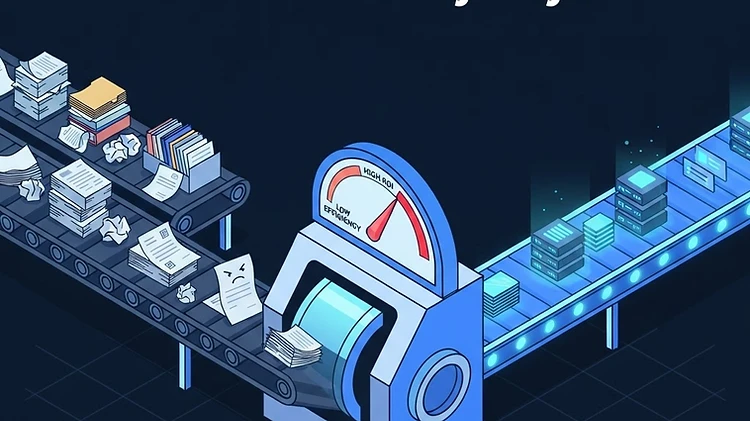
The automation temptation
When a new generation of AI tools arrives, the instinct is to automate everything. That instinct is wrong.
Most processes are not worth automating. The ones that are share a recognizable shape, and the payoff is usually not the thing you set out to optimize.
The pattern that pays
Automate processes that are:
- Repetitive — the same steps, many times a day.
- Rule-bound — the logic is stable and well understood.
- Error-prone — humans make mistakes doing them.
- Low-judgment — they do not require creative or ethical reasoning.
Processes with all four traits are where automation returns real, measurable value.
The unexpected payoff
The stated goal of automation is usually efficiency. The real payoff is almost always capacity.
When a team no longer spends hours on mechanical work, that capacity flows to the problems that actually needed human judgment all along — the strategic, the creative, the relational.
A note on judgment
Never automate the judgment step. Automate everything around it so the judgment is faster, better informed, and less fatigued. The human is not removed from the loop. The loop is rebuilt around the human.
About the author
David Walter
Founder of BrightPoint Consulting Solutions, with more than 35 years of experience across startups and senior executive consulting, including secure IoT networking, FDA-regulated product development, and blockchain and crypto platforms, and teaching. He writes about data privacy, cybersecurity, AI, and building businesses with the right tools.
Frequently Asked Questions
Which specific types of processes should I target for automation?
Target processes that are repetitive, follow clear rules, are prone to human error, and do not require creative or ethical judgment.
If the goal isn't just efficiency, what is the primary benefit of automation?
The primary benefit is increased capacity, which allows your team to dedicate more time to strategic, creative, and relational work that requires human insight.
Should I automate the decision-making steps in my workflow?
No, you should never automate the judgment step itself. Instead, automate the surrounding tasks to provide humans with better information to make those decisions more effectively.
Related Articles
View all

BrightPoint Insights: Navigating AI Growth and Privacy
This week’s build-in-public report highlights our focus on AI integration and data privacy. We explore recent publications and the metrics shaping our path forward.

Protecting Your Reputation: Why Data Privacy is Your Best Competitive Advantage
In an era of rapid AI adoption, data integrity and security are no longer optional. Our Data Privacy course provides a structured path to ensuring your organization remains complia

BrightPoint Insights: Building Through the AI Hype
This week, we focused on moving beyond AI trends to deliver actionable frameworks for enterprise integration and privacy. While engagement metrics remain steady, our content strategy is shifting toward deep-dive educational assets.